Defensible Space

Defensible Space saves homes and lives!
Defensible space does NOT mean removing all vegetation from around your home. Defensible space means MODIFYING and MAINTAINING vegetation to reduce the intensity and speed of a wildfire when it reaches your home.
Create a "clean" zone with few or no combustibles within 30 feet of your home.
Create a fuel-reduction zone from 30'-100' (or to your property line, if closer) to slow the spread of an approaching wildfire.
- Cut dry grass regularly within 100 feet of your home. Gas powered tools can start fires when fire danger is high, so work early in the morning on a cool, moist day, if possible. Rake and remove clippings.
- Use irrigated, fire-resistant plants where possible. Rock, stone, and other materials can be used to create an attractive, fire-safe landscape.
- Make decks fire safe by clearing vegetation and combustibles like lumber and firewood from underneath. Enclose underside with fire resistant building materials if possible.
- Apply 1/4 inch mesh screen to all roof and basement vent openings.
- Keep trees limbed up 10' from the ground or from the tops of plants below (or 1/3 the height of trees shorter than 30'), and cut back at least 10' from your chimney and roof. Remove all dead limbs.
- Clean all needles and leaves from the roof and rain gutters regularly during fire season.
- Maintain your landscaping by mowing, watering, weeding and removing dead needles and leaves.
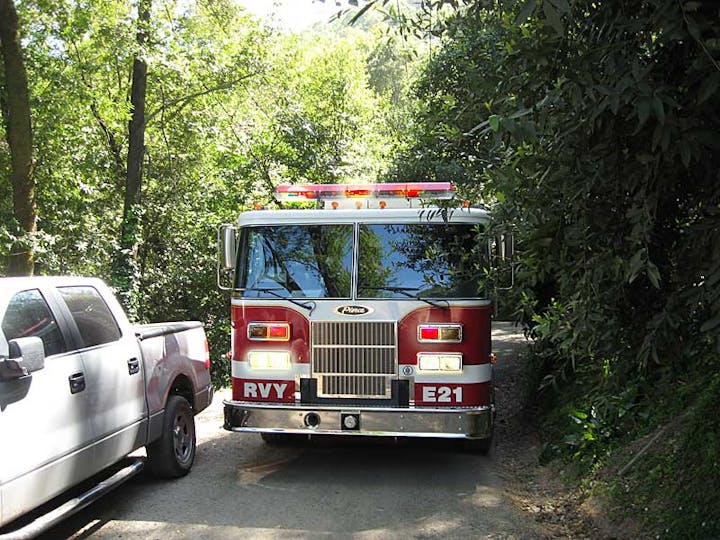
- Maintain fire engine access to your home by clearing vegetation 10 from the sides of roads and driveways and 14' vertically.
- Make your address visible from the street in both directions, with 4" (minimum) reflective numbers on a contrasting background.